In Scrabble, two and three-letter words form the foundation of any placement strategy. Ace and gin are among these short terms, validated by the Official Scrabble Dictionary, that allow players to connect to existing words on the board while opening bonus squares. Understanding their point value and possible combinations changes the way each turn is approached.
Point value of ace and gin on the Scrabble board
Before considering placement, it’s essential to know the base value of each letter. In French Scrabble, A is worth 1 point, C is worth 3 points, and E is worth 1 point. The word ace totals 5 points without any square bonuses.
For gin, G is worth 2 points, I is worth 1 point, and N is worth 1 point. The gross total is 4 points. One point less than ace, but gin has an advantage: G easily combines with common suffixes, making it easier to extend in the next turn.
These totals may seem modest. Their interest lies less in direct points than in their ability to activate multiplier squares or form simultaneous crosswords.
An ace placed on a “double word” square already scores 10 points. If the C lands on a “triple letter” square, the total rises to 11 points for a three-letter word. This relationship between the number of letters played and the score obtained is the true criterion for the profitability of a move.
To delve deeper into the validity and strategic placements around the words ace and gin in Scrabble, the point calculation always depends on the intersections with the bonus squares on the board.
Crosswords and extensions: leveraging ace and gin in connection
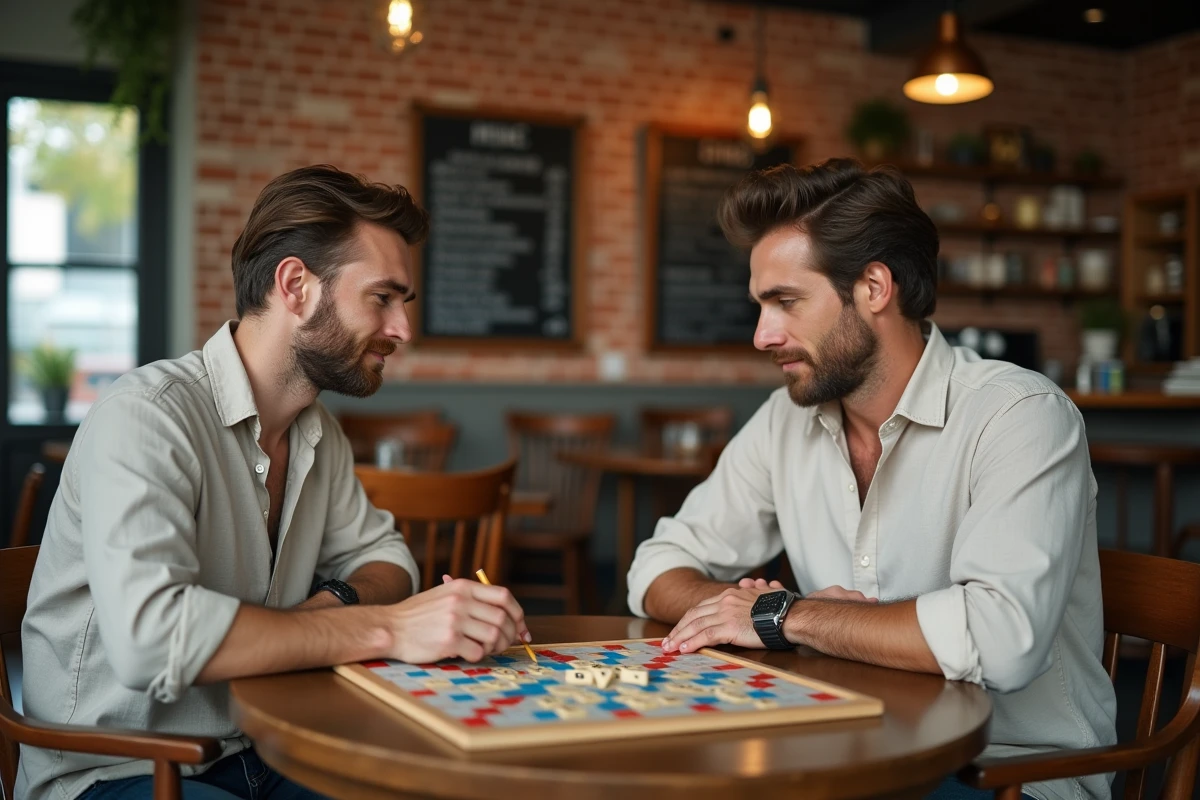
Placing a short word parallel to an existing word, in such a way as to create multiple two-letter words simultaneously, is the most profitable technique in Scrabble. Ace and gin lend themselves particularly well to this exercise.
Creating two-letter words in parallel
When ace is placed parallel to an already laid word, each letter can form a valid two-letter word with the adjacent letter. Common combinations include:
- A + an adjacent consonant or vowel: ah, ai, an, as are all valid and earn additional points at each intersection
- C + an adjacent vowel: ce (3 points minimum) is the most common, but ci also works to open lines down the board
- E + an adjacent letter: eh, en, es, and form very versatile two-letter words, useful for doubling the score of the move
Each two-letter word created in parallel adds its own points, including square bonuses. A well-thought-out placement of ace can thus generate three two-letter words in addition to the word itself, multiplying the total score of the move.
Extending gin for high-scoring moves
Gin accepts extensions both forward and backward. By adding letters, longer words are formed that retain gin as the core. The most direct extension is adding an S to form gins, allowing the word to be placed on an already occupied line while validating a crossing.
Adding letters in front also opens up possibilities. The complete word must exist in the Official Scrabble Dictionary, but the logic remains the same: gin serves as an anchor point, and the added letters capture the surrounding bonus squares.
Placement strategy on the bonus squares of the Scrabble board
The standard board features multiplier squares arranged in a symmetrical pattern. The “double letter” and “triple letter” squares are concentrated in the intermediate areas, while the “double word” and “triple word” squares occupy the diagonals and borders.
For ace, placing the C on a triple letter square scores 9 points for that single letter, which is almost double the gross total of the entire word. The C is the most “valuable” letter of the word: any placement strategy for ace should aim to maximize the value of this consonant.
For gin, the logic shifts slightly. The G is worth 2 points, making it interesting on a multiplier square, but the real strength of gin lies in its compatibility with crosswords. Rather than trying to isolate the G on a bonus square, it is often more profitable to place gin in parallel to create multiple intersections.
Ace and gin in classic and online Scrabble: adapting your strategy
Game formats influence the tactical value of these short words. In classic Scrabble (the one played at home or in clubs), each player has their own rack and plays in turn. In this context, placing ace or gin often serves as a transition move: the direct score remains modest, but the placement prepares the next turn by opening or closing areas of the board.
In duplicate Scrabble, all players seek the best move from the same draw. Ace and gin appear less frequently as optimal moves there, as competition pushes towards longer words for maximum score. Their utility is then limited to very specific configurations where multiple crossings dominate.
On digital platforms like Scrabble GO, the mechanics of bonuses and the game modes specific to the app further modify the equation. The speed of online play encourages the use of short words from memory, without verification. Knowing by heart the validity of ace and gin prevents losing a turn on a rejected word.
- In classic play, ace and gin serve as support moves to prepare extensions for the next turn
- In duplicate, their use is limited to board configurations where multiple crossings surpass a long word
- Online, the speed of execution favors players who master these short words without hesitation
The choice between placing ace or gin depends as much on the rack as on the board. Ace offers one more point in gross value, but gin extends more easily and crosses better with common consonants. A player who keeps both in their active memory has additional options each turn, which often makes the difference in the final score over the course of a game.