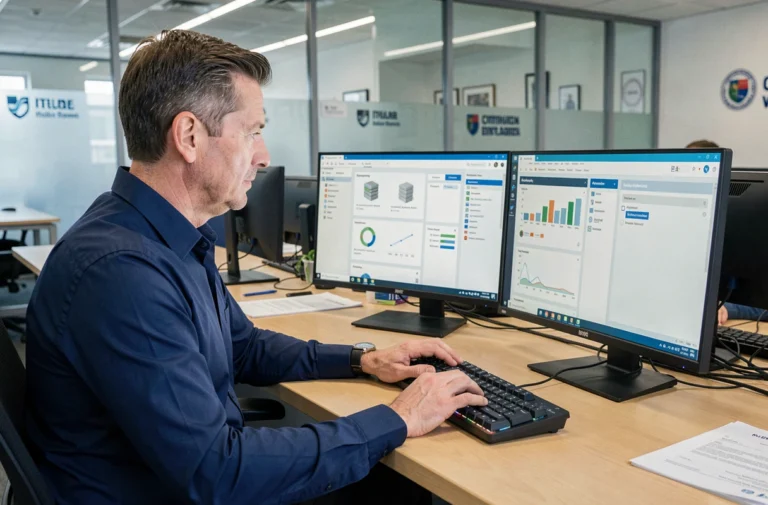
The optimization of real estate construction project management relies on several essential pillars. Detailed and realistic planning forms the foundation upon which every decision should be based. Mastery of the budget, through strict cost monitoring and efficient resource allocation, is fundamental for the financial viability of the project. Transparent communication among all stakeholders, including suppliers, builders, and investors, helps avoid misunderstandings and facilitates smooth progress. Diligent regulatory monitoring ensures compliance with current standards, thus avoiding costly delays or potential penalties.
Optimization Strategies for Construction Project Management
Feasibility analysis, project setup, and project monitoring intertwine in construction project management. Start with a feasibility analysis that includes market studies, financial and technical analyses. This preliminary examination sheds light on the long-term viability of the real estate project. Feasibility is based on concrete data, market trends, and, of course, the evolution of the BT01 index, an essential barometer in estimating construction costs in the building sector.
Project setup requires establishing a solid legal structure and seeking appropriate financing. Find the most suitable legal status for your project, whether it is a classic setup or a sale in future state of completion (VEFA). Then engage in a quest for financing that aligns with the project’s needs, while incorporating the applicable tax provisions and regulations.
Project monitoring, on the other hand, involves setting up a forecast schedule and a forecast budget, complemented by performance indicators (KPI and CPM) to measure progress and compliance with the initial objectives. Actively manage stakeholders, ensure that each step progresses according to the established plan, and adapt your strategy based on unforeseen events and necessary adjustments.

Risk Management and Quality in Site Monitoring
In the construction realm, risk management proves to be fundamental. Prevent unforeseen events by implementing continuous monitoring and analysis, which will allow for increased responsiveness to contingencies. Flexibility in planning is also a pillar: adjust schedules in real-time to incorporate changes and stay on course towards objectives. Periodic reassessment of the project’s feasibility ensures that every decision made remains aligned with market constraints and regulatory requirements.
Ensuring effective communication and coordination among all site stakeholders, from the project owner to the craftsmen, becomes a crucial point. Use management software tools such as Microsoft Project to centralize information and facilitate exchanges. Systematic documentation and archiving of data also play a significant role in traceability and knowledge management, essential elements for anticipating and resolving issues that may arise during the construction phase.
A rigorous management of funds is necessary to avoid budget overruns. Implement fund management protocols to monitor financial flows, ensure compliance with forecasts, and make necessary adjustments. Mastery of costs, combined with meticulous site monitoring, guarantees adherence to quality standards and the delivery of a project that meets client expectations and current regulations.