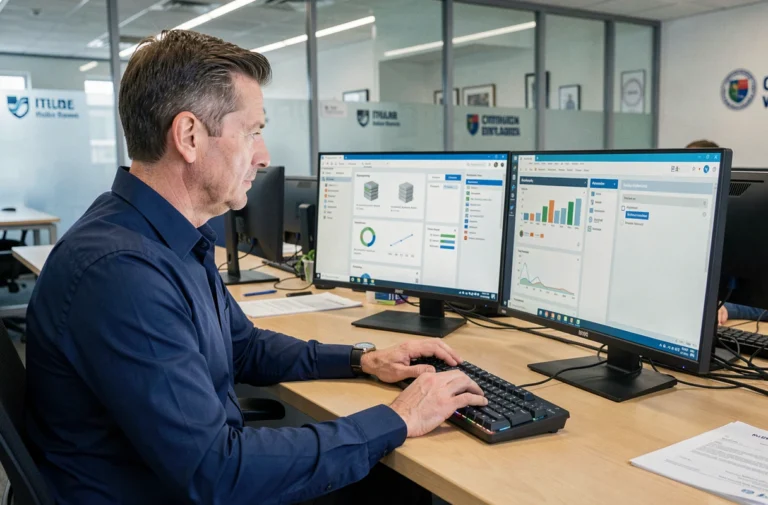
Sedentary behavior cannot be compensated for by a single workout session at the end of the day. Since August 2025, Anses has clearly distinguished between reducing prolonged sitting time and engaging in sports. This decoupling changes the framework for understanding usual wellness advice and forces us to rethink how we structure our daily health routines.
Sedentary Lifestyle and Physical Activity: Two Distinct Health Levers
Confusion persists between “moving more” and “sitting less.” Anses now recommends interrupting sitting periods at least every 30 minutes. Walking, standing up, stretching—regardless of the form—sends a physiological signal to the metabolism that differs radically from structured exercise.
In practice, we observe that physically active individuals (three weekly running sessions, for example) still sit for more than eight hours a day without interruption. This “active-sedentary” profile shows degraded metabolic markers that exercise alone does not correct.
The National Sport-Health Strategy 2025-2030, led by the Ministry of Health, incorporates this distinction with 12 dedicated measures. Physical activity is positioned as a tool for preventing chronic diseases and supporting mental health, not just as a means of maintaining physical fitness. For those who wish to access declicweb.fr health, the available resources help better understand these mechanisms.

Exercise on Prescription: A Medical Framework Still Unequally Accessible
Adapted physical activity (APA) has been prescribable since 2016, and the regulatory framework was expanded in 2023. The principle is solid: a doctor identifies a chronic condition and prescribes a program of exercises supervised by a trained professional.
The problem lies in funding. The lack of a uniform national coverage hinders access to exercise on prescription. According to France Assos Santé, the gap between the medical recognition of the system and its actual accessibility remains significant in 2026.
In practice, coverage depends on the local community, the patient’s mutual insurance, and the availability of APA educators in the area. Some municipalities offer free slots, while others have no registered structures. This uneven network turns a theoretical right into a geographical lottery.
Criteria for Evaluating Access to Exercise on Prescription Locally
- Check if the nearest sport-health center offers APA slots supervised by certified professionals, and not just awareness workshops
- Ask your mutual insurance about possible partial coverage of sessions, as reimbursement levels vary greatly from one contract to another
- Consult the register of APA educators in the department to confirm the presence of practitioners trained in the relevant conditions (type 2 diabetes, heart failure, chronic low back pain)
Wellness Apps and Health Data: The European Regulatory Framework in 2026
The European regulation on the European Health Data Space (EHDS), adopted in 2025, provides for a gradual deployment of interoperability rules and sharing of medical data. Apps connected to medical records will be subject to compliance requirements that most users are unaware of.
For those using an activity tracker, a digital food diary, or a sleep tracking app, the issue goes beyond mere user comfort. These tools collect physiological data that, aggregated over several months, create an exploitable health profile.
Points of Caution Before Connecting an App to Your Care Pathway
We recommend clearly distinguishing comfort apps (pedometer, hydration reminder) from apps that interact with medical data. The former do not fall under the same regulatory obligations.
The interoperability provided for by regulation 2025/327 means that data from a compliant app can eventually feed into the shared medical record. This is a gain for longitudinal tracking, but it assumes that the user understands what data is transmitted and to which actors.

Wellness Routine: Structuring Without Rigidifying
The wellness routine protocols shared online have a common flaw: they prescribe a fixed sequence without considering daily physiological variability. Sleep quality, professional stress levels, and hormonal cycles change daily the capacity for recovery and tolerance to effort.
Rather than a rigid weekly schedule, we recommend a threshold system. The principle is simple: define personal markers (subjective sleep quality, tension felt in the neck, energy level upon waking) and adjust the nature of physical activity accordingly.
- Sleep perceived as restorative and high energy: moderate to high intensity session (running, swimming, strength training)
- Fragmented sleep or residual fatigue: gentle mobility, stretching, outdoor walking
- Identified acute stress (mental load, conflict, deadline): structured breathing exercises, heart coherence, restorative yoga
This system avoids the guilt associated with missed sessions and maintains adaptive regularity. Consistency in practice matters more than occasional intensity.
Nutrition and Stress Management: The Often-Underestimated Interdependence
High cortisol levels alter eating behaviors by steering choices towards high-calorie foods. Working on stress management before correcting diet yields more sustainable results than the reverse. Nutritional prevention without considering the psychological terrain remains superficial.
The use of natural products (phytotherapy, adaptogens) is gaining popularity, but their effectiveness depends on the individual context. No supplement can replace a comprehensive strategy that articulates sleep, physical activity, and emotional regulation.
The next step to improve daily health does not involve yet another online program or a miracle supplement. It involves an honest reading of one’s own physiological signals and the ability to adjust habits based on what the body communicates each morning.