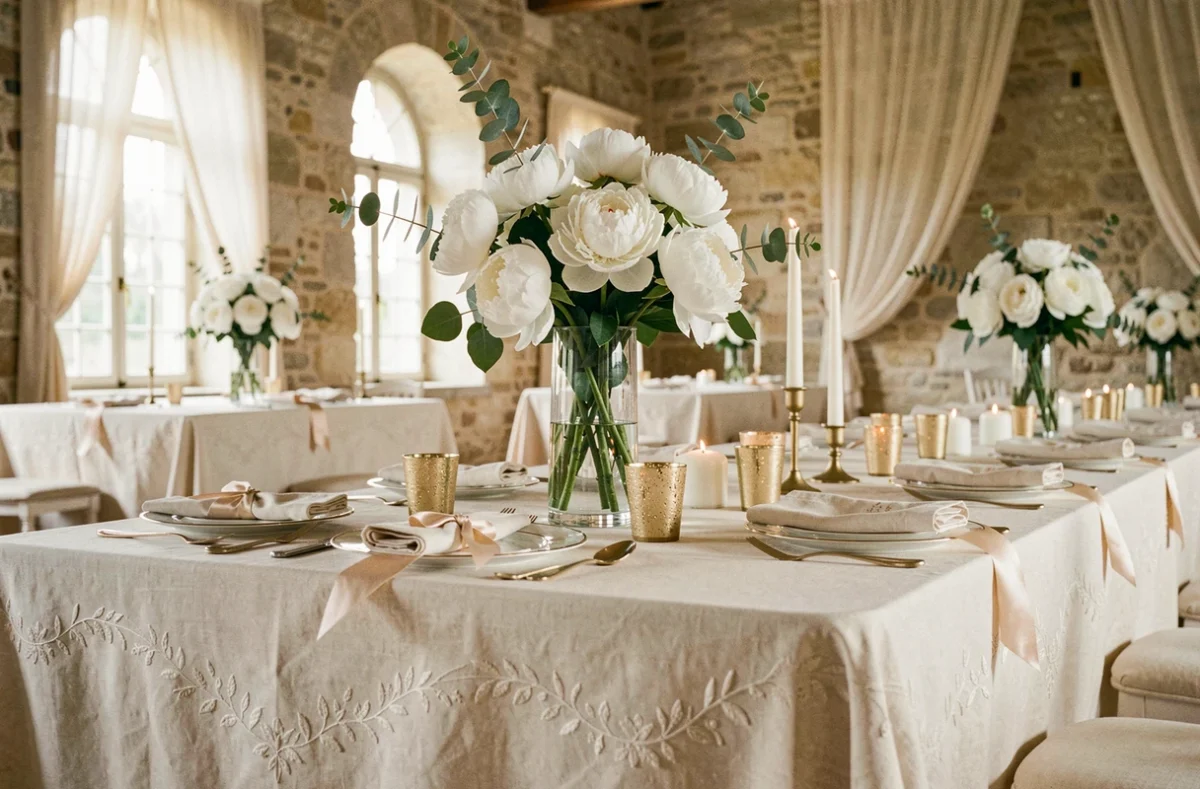
Choosing wedding decor often involves balancing what one imagines with what the venue, season, or budget truly allow. Before flipping through inspiration catalogs, it’s essential to understand the technical constraints that affect the final outcome. It is in this concrete realm that wedding decoration finds its true meaning.
Seasonal Flowers and Sustainable Alternatives for a Successful Wedding
Have you ever noticed that a bouquet bought in winter doesn’t hold up as well as a bouquet from June? It’s not a coincidence. Local and seasonal flowers provide better durability on the big day because they adapt to the surrounding climate. They haven’t undergone long-distance transport or prolonged cold storage.
This logic is leading more and more couples to favor varieties grown close to the reception venue. The result: fresher compositions, bolder colors, and visual coherence with the surrounding landscape.
For off-season weddings or in venues without a water source, dried flowers and alternative foliage take over. They don’t wilt in the heat, are not affected by wind, and can be prepared weeks in advance. By exploring the decorations offered by Mariés de Sylvie, one discovers how these elements fit into a complete scenography, from table centerpieces to ceremony arches.
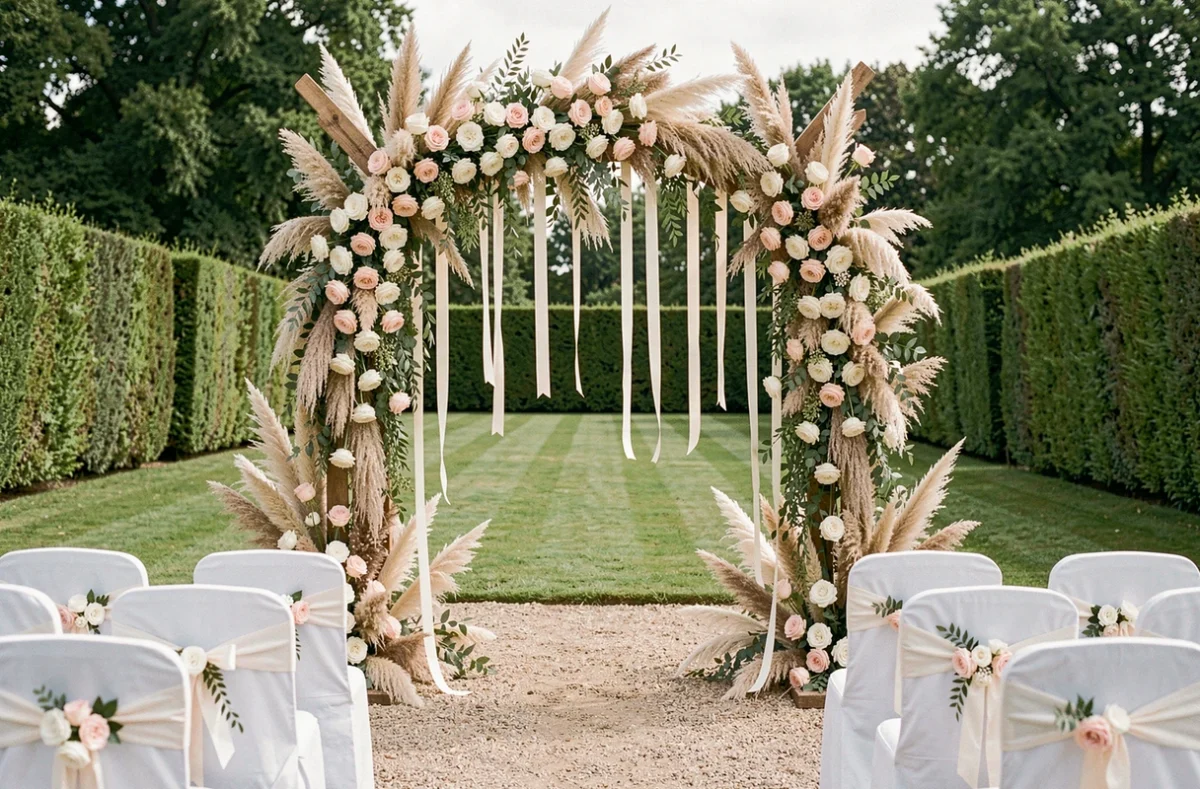
Reuse is also gaining ground. Reusable decorative elements (vases, lanterns, frames, glass containers) reduce waste while providing a practical alternative when weather or budget complicates the use of fresh flowers.
Technical Constraints of DIY Floral Decoration
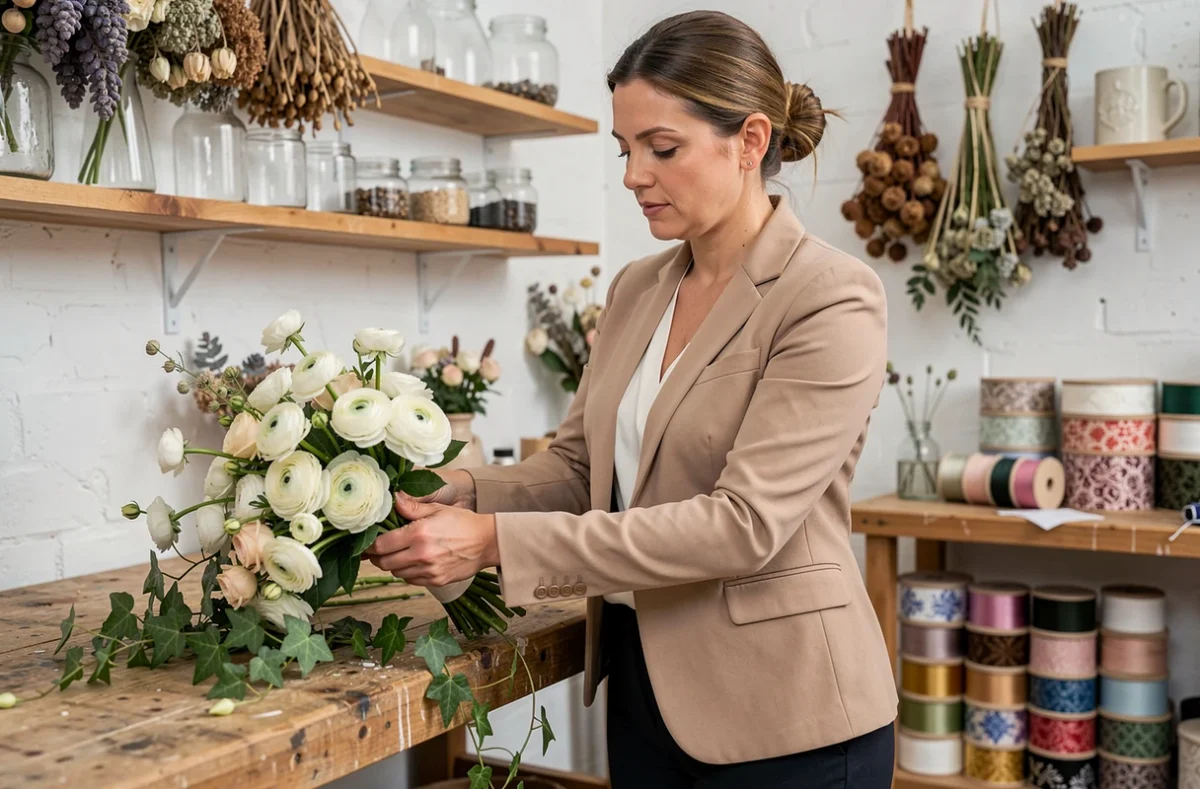
Entrusting the creation of compositions to friends is tempting, but the logistics are more demanding than they appear. Cut flowers must be conditioned 24 to 48 hours before the reception. They require cool storage, damage-free transport, and quick on-site installation.
A forgotten conditioning step can ruin several days of preparation. Without a controlled cold chain, stems soften and petals brown before the guests even arrive.
Here are the points to check if you opt for a DIY approach with your friends:
- Have sufficient refrigerated space to store all compositions the day before the wedding
- Plan for waterproof and secured containers for transport (shallow boxes, bubble wrap around vases)
- Schedule at least two hours for on-site setup, with early access to the venue
- Identify a point person to oversee the setup and manage unexpected issues (broken stem, tipped vase)
These details may seem trivial on a Pinterest board. In practice, they make the difference between a harmonious table and a sagging centerpiece.
Table Scenography: Dishware as a Decorative Element
The current trend goes beyond just a simple tablecloth and central bouquet. Dishes and tableware are becoming integral scenographic elements. Mismatched stoneware plates, tinted glasses, raw linen napkins: each place setting contributes to the ambiance.
Why this choice? Because couples often reduce the number of guests to allocate more budget to the quality of the experience. With fewer place settings to set, it becomes possible to invest in more refined, rented, or vintage pieces rather than disposable dishware.
This shift has a direct effect on the overall decoration. When the table itself tells a story, the need for decorative accessories decreases. Fewer garlands, less confetti, but a cohesive ensemble where each object has its place.
Combining Materials Without Overloading
The classic pitfall is to multiply textures. Wood, metal, glass, fabric, plants: beyond three dominant materials, the eye gets lost. A simple rule works well: choose a base material (the wood of a table, for example), an accent material (brass for candlesticks), and an organic element (foliage or flowers).
This approach avoids the “showroom” effect where everything looks beautiful separately but doesn’t form a cohesive whole. It also makes the work of the vendors setting up the venue easier, as the material palette remains clear and reproducible from one table to another.
Wedding Decoration Budget: Key Areas to Prioritize
Decoration represents a variable cost, often underestimated at first. Rather than spreading an equal budget across each area (entrance, ceremony, reception hall, outdoor), it is more effective to prioritize.
- The reception table deserves priority: this is where guests spend the most time and take the most photos
- The arch or ceremony altar is photographed a lot but lasts only a moment; a moderate investment is often sufficient
- Transitional spaces (hallways, stairs, parking) can suffice with careful lighting and a few simple elements
Focusing the budget on two or three key areas creates a more striking effect than scattering it everywhere. Guests remember the overall impression, not the number of bouquets spread throughout the venue.
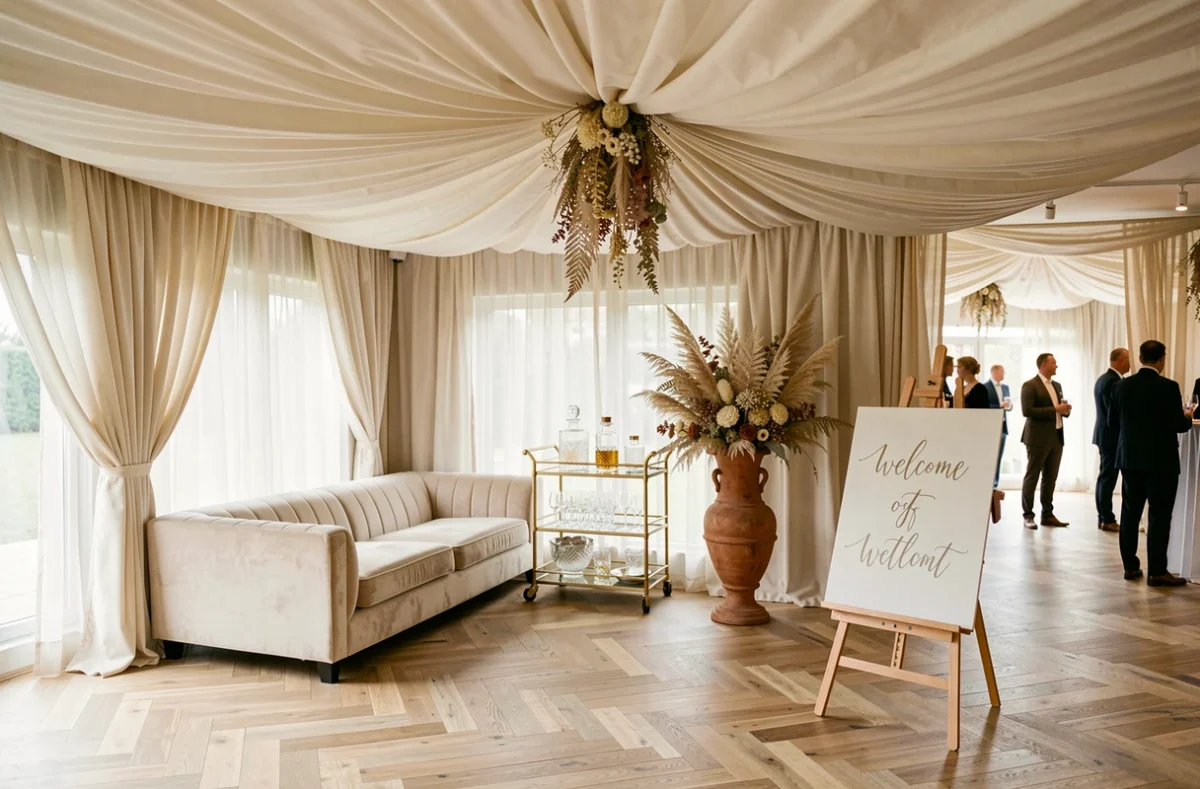
The choice between renting and buying also depends on the post-wedding project. Rented items cost less per unit but disappear the next day. Purchased or handmade pieces can decorate the home afterward, which changes the calculation.
A well-decorated wedding is not one that accumulates the most objects. It is one where each element, from the flower to the glass, has been chosen based on the venue, season, and actual time available for setup. This coherence between intention and feasibility is what separates a “pretty on paper” room from a space where guests feel welcomed.