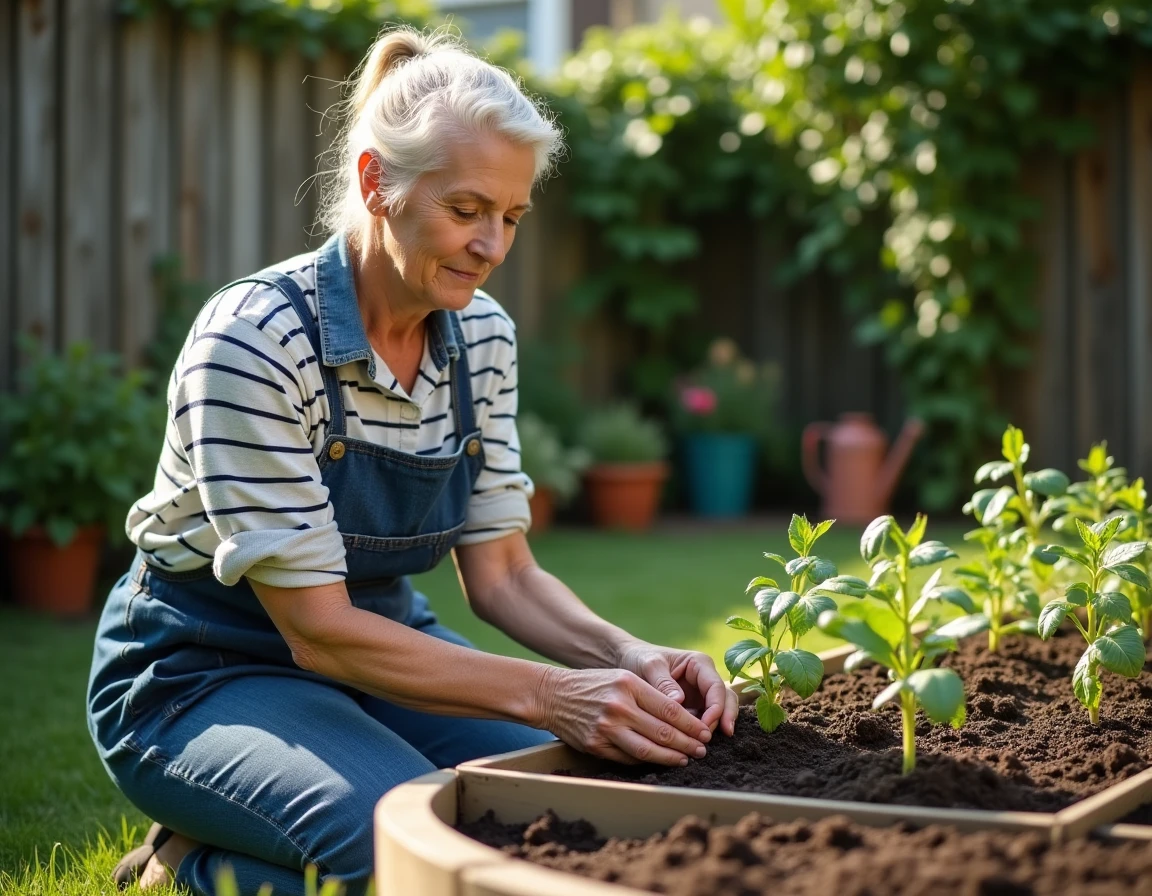
The success of a flowering mass rarely hinges on the moment of planting. It is determined in advance, based on technical choices that most gardening guides gloss over: soil preparation, water management in the context of water restrictions, and crop protection without resorting to synthetic products now banned for individuals.
Soil analysis before planting flowers: pH, texture, and drainage
A soil test remains the most cost-effective action before any cultivation. We recommend measuring pH, organic matter content, and water retention capacity before choosing any variety.
A compact clay soil retains excess water and suffocates the roots of most annual flowers. Conversely, a sandy soil drains too quickly and requires frequent watering. The soil texture determines the choice of species, not the other way around.
Correcting an overly acidic pH with lime amendment or lowering an alkaline pH with elemental sulfur only yields visible results after several months. Anticipating this step as early as the autumn before spring planting avoids unpleasant surprises.
Drainage is easily tested: dig a hole thirty centimeters deep, fill it with water, and time it. If the water stagnates for more than an hour, adding coarse sand or gravel at the base of the mass is necessary. This check, which takes five minutes, saves considerable losses on perennials sensitive to wet feet (lavenders, sages, gauras).
For those who wish to grow flowers with Jardindivert, this preliminary analysis step guides towards species suited to each type of terrain.
Restriction of pesticides and protection of flowering beds without synthetic products
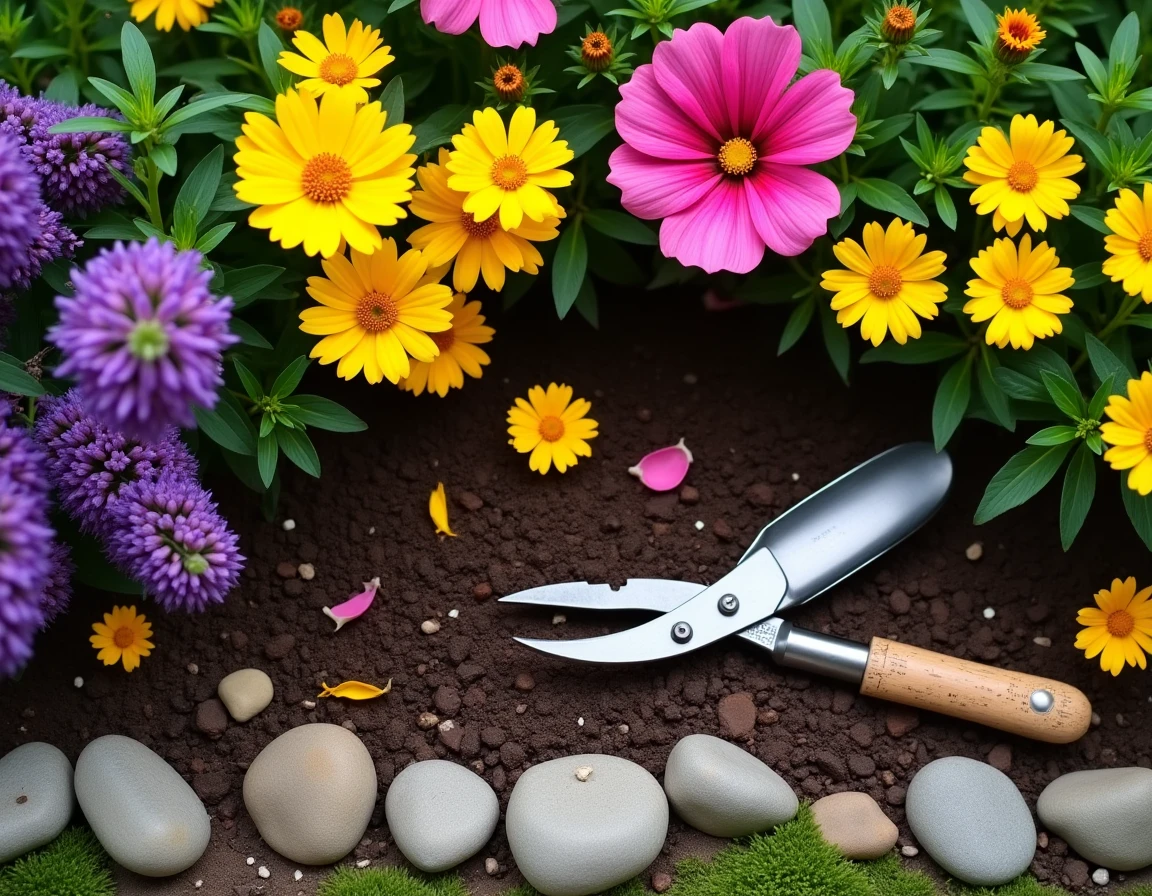
The Labbé law and its successive extensions have legally reduced the phytosanitary arsenal available to amateur gardeners. In practice, most synthetic fungicides and insecticides previously sold in garden centers are no longer accessible to individuals.
Prevention now replaces curative treatment in managing diseases and pests in the garden. We observe that gardeners who anticipate these constraints achieve more resilient flower beds over time.
Effective biocontrol methods for flowers
- Plant associations act as natural repellents: marigold (tagetes) planted at the base of rose bushes reduces the pressure from nematodes and certain aphids due to its root secretions
- Varietal diversity within the same bed limits the spread of fungal diseases, as a pathogen specific to one species does not find an immediate host on its neighbor
- Organic mulching (wood chips, straw, dead leaves) covers the soil, slows the germination of weeds, and maintains consistent moisture that reduces water stress, an aggravating factor for pest attacks
- Beneficial insects (ladybugs, lacewings, hoverflies) naturally settle in gardens that provide them with refuge areas: diverse hedges, wood piles, grassy strips
Plant diversity is not an ecological stance. It is a technical strategy that directly compensates for the absence of chemical treatments.
Flowering mixes for pollinators: sowing phacelia, borage, and cosmos
Participatory science programs like Vigie-Nature have noted a strong increase in the sowing of flowering mixes for pollinators in private gardens, driven by campaigns from the French Office for Biodiversity. This is significant for flower cultivation: a garden rich in pollinators produces more abundant blooms and more viable seeds.
Phacelia, borage, centaureas, and cosmos are among the most effective species for attracting honeybees and wild pollinators. Their sowing at the edges of beds or in between rows requires only superficial soil work and a light covering of fine soil.
Integrating pollinator-friendly plants into a planting plan
A common mistake is to sow a pollinator mix in an isolated block, disconnected from the rest of the garden. We recommend instead to disperse them in narrow bands between ornamental flower beds. This arrangement creates foraging corridors that benefit the entire garden.
Borage self-seeds spontaneously from year to year. Cosmos, an annual, requires new sowing each spring but germinates quickly and blooms within a few weeks. Alternating annuals and perennial pollinators ensures continuous floral coverage from spring until the first frosts.
Watering flowers during drought: adapting frequency to the climate
Episodes of heatwaves and drought in recent years have changed the game for gardeners. Watering thoroughly but less frequently is more effective than shallow daily watering, as water penetrates deeply and encourages vertical rooting.
Watering at the base, early in the morning, limits evaporation and foliar fungal diseases. Overhead sprinkling in full heat wastes resources and promotes powdery mildew on roses and zinnias.
Choosing drought-resistant varieties (gauras, echinacea, yarrow, shrub sages) significantly reduces water needs without sacrificing the aesthetics of the bed. Once well-established after their first season, these species require supplemental watering only during prolonged dry spells.
- Mulch to a depth of at least five centimeters to retain soil moisture and reduce watering frequency
- Group plants by water needs (dry bed, cool bed) to avoid overwatering Mediterranean species while trying to satisfy hydrangeas
- Install a programmable drip irrigation system on the most demanding beds, with a flow rate suited to the soil texture
Grouping flowers by water needs is the most underestimated principle in bed design. It simplifies maintenance and reduces overall garden consumption.
Growing flowers in a challenging climatic context does not happen by chance. A well-analyzed soil, varieties chosen for their resistance, pollinators attracted by strategically placed nectar plants, and reasoned watering form a coherent system. Every technical decision made in advance reduces the time spent correcting avoidable problems.